AI access
Control model families and AI capabilities separately.
Approve recommended models, aliases, image models, web search, enhanced search, summaries, MCP access, and billing-sensitive AI features independently.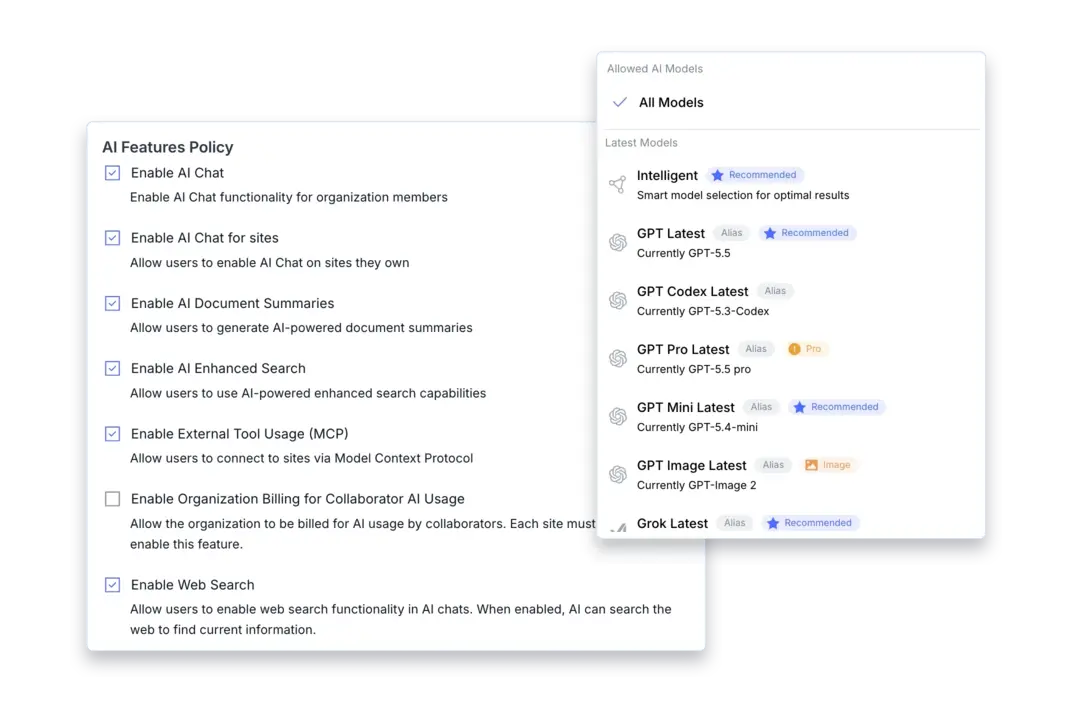
Sites
Governed controls for sensitive Sites, AI records, agent runs, and exports
Clear Ideas combines organization AI policy, immutable governed AI records, signed evidence export, Site export snapshots, site lifecycle controls, and audit visibility inside one governed environment. Teams can collaborate, automate, and use AI without losing control over policy, evidence, or reviewability.
Policy, evidence, and control
Governance should make sensitive collaboration, AI use, and external review easier to trust as your Clear Ideas Sites grow. Policy belongs next to the content, users, AI records, and audit trail it governs.
Organization policy controls AI features, permitted models, web search, MCP access, mandatory instructions, signing defaults, Site exports, lifecycle behavior, and evidence export without pushing teams into a separate governance tool.
Models, tools, policy, and evidence
AI access
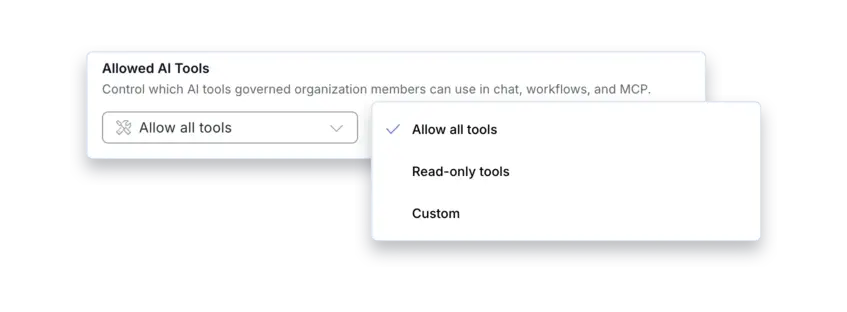
Tool access
Organization policy
Governance activity and evidence
Governance capabilities
Clear Ideas brings together policy, evidence, lifecycle, export, verification, access review, Site settings history, and organization AI usage inside the same governed environment as the Sites, AI records, and agents teams already use.
Security foundation
Governance is more useful when the underlying protection model is already strong. Clear Ideas governance works alongside encryption, permissions, watermarking, redaction, and audit trails rather than replacing them.
Security remains available as its own feature area for teams that need to inspect encryption, role-based access, watermarking, redaction, and audit visibility. Explore Security.
Where governance shows up
Governance in Clear Ideas is most useful because it applies to the sites, AI records, agents, review processes, and audit records teams are already using.
Related reading
Further reading on governed AI, auditability, and controlled document work.
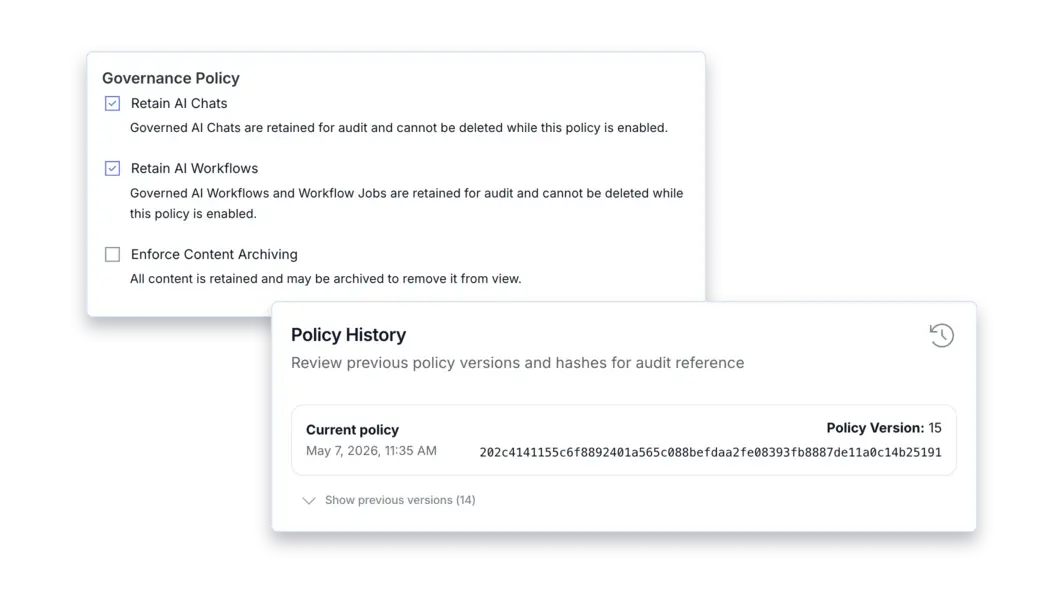
Organization policy gives teams a central way to define how sensitive Sites, AI records, and agent runs should behave. It covers AI features, permitted models, web search, MCP and external tool access, mandatory AI instructions, signing defaults, policy version history, and lifecycle controls.
Clear Ideas keeps AI inside the same governed environment as your documents, permissions, sites, analytics, and audit trail. Chats, agent runs, and governed MCP content access are governed records with controlled evidence export, rather than leaving teams to reconstruct what happened across disconnected tools.
AI chats, agent runs, and governed MCP evidence are governed records. Organization policy can also prevent deletion of governed AI records where retention matters. Teams can still archive records to keep day-to-day views clean without losing governed history.
Read-only keeps a site visible while preventing new edits, uploads, renames, moves, and deletions. Archive is the stronger lifecycle control: it removes the site from normal active work while preserving the underlying records and history.
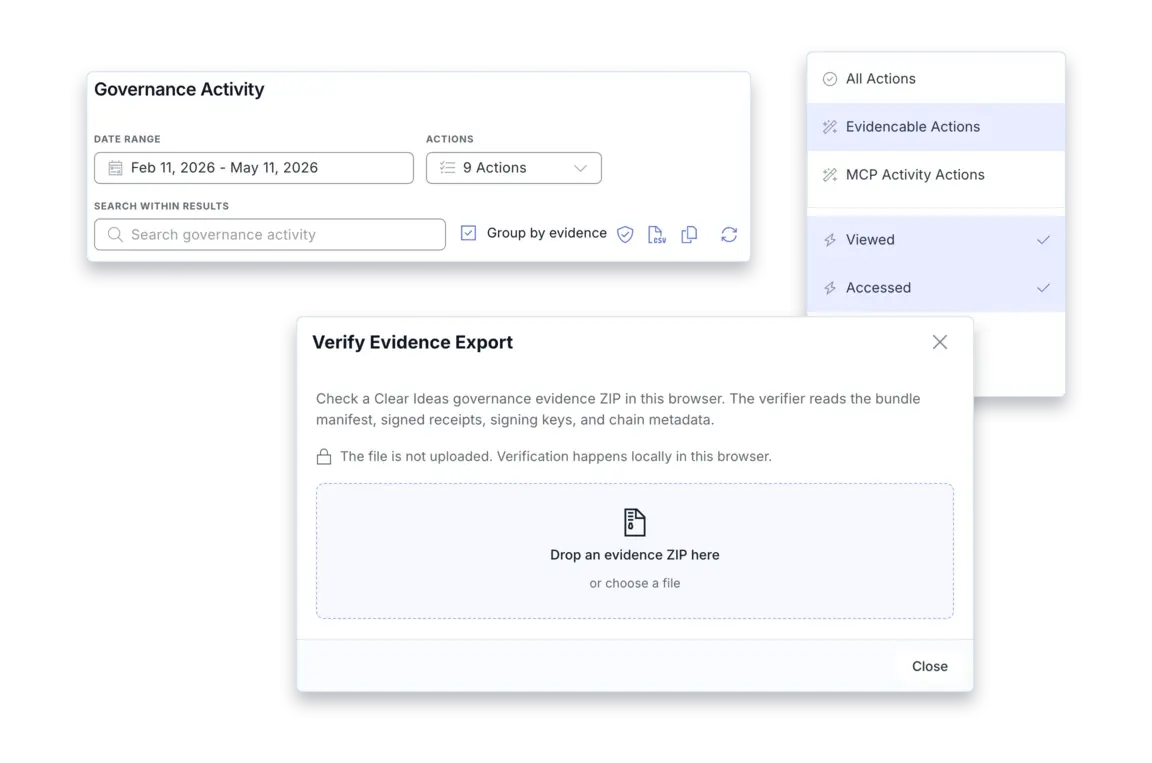
Evidence export bundles the governed records associated with an AI Chat, Governed Agent, Agent Run, or governed MCP evidence session into a single downloadable package. Signed exports can include Ed25519 receipts, file hashes, and key metadata so reviewers can verify the bundle after download. Organization administrators retrieve and verify exports from Governance Activity, which keeps review and evidence retrieval in one place.
Yes. Site exports package Site content into controlled ZIP snapshots that can be run manually or on a schedule, with progress, cancellation, downloads, deletion, retention, and policy controls. They complement signed governance evidence by preserving the workspace content itself.
No. The point of Clear Ideas governance is to bring stronger controls into an environment that is still practical for growing teams. You do not need a separate enterprise governance stack to get controlled AI, audit visibility, and site-level policy.