AI access
Control model families and AI capabilities separately.
Approve recommended models, aliases, image models, web search, enhanced search, summaries, MCP access, and billing-sensitive AI features independently.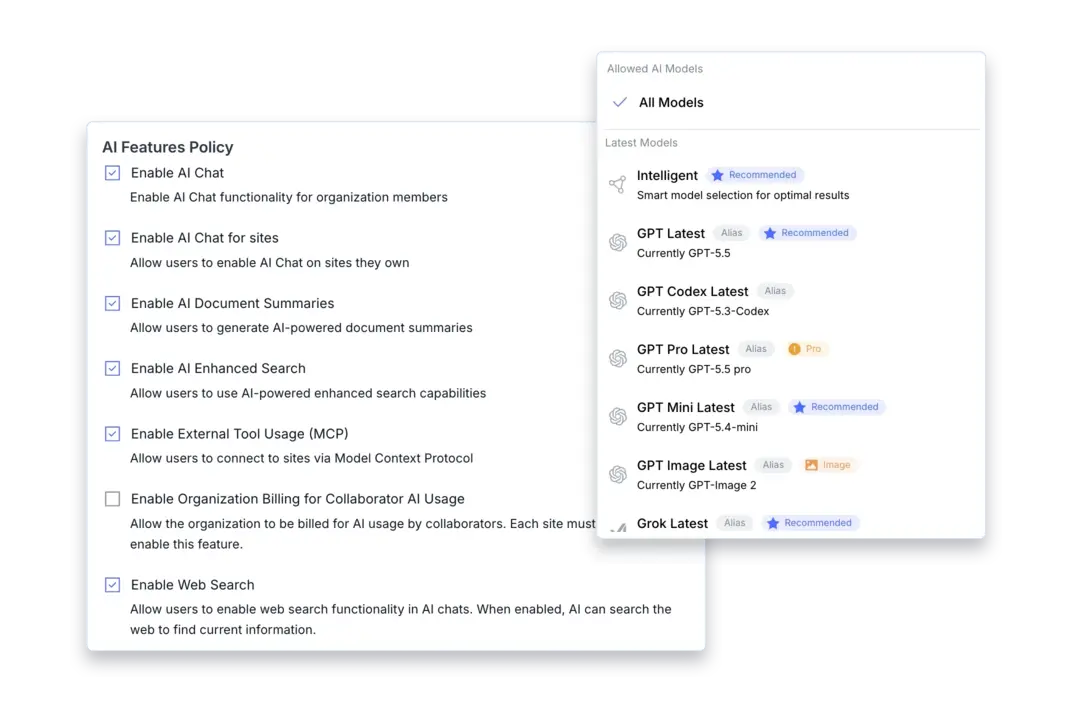
Design agents anywhere, then run them in Clear Ideas against governed Sites with approved connections, triggers, human review, generated files, run traces, and signed evidence.
Clear Ideas helps teams run agents with approved sources, controlled connections, review checkpoints, generated deliverables, and evidence.
Models, tools, policy, and evidence
AI access
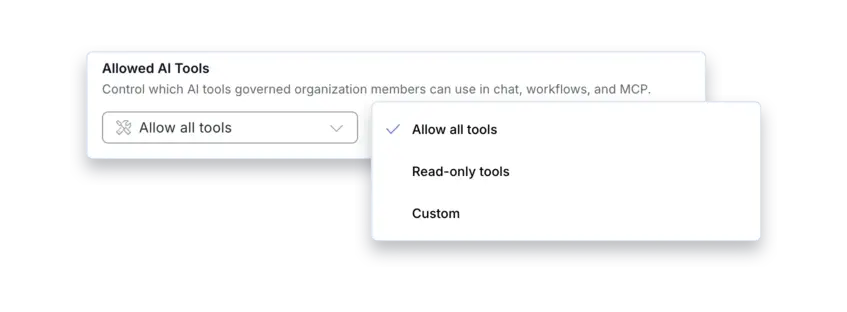
Tool access
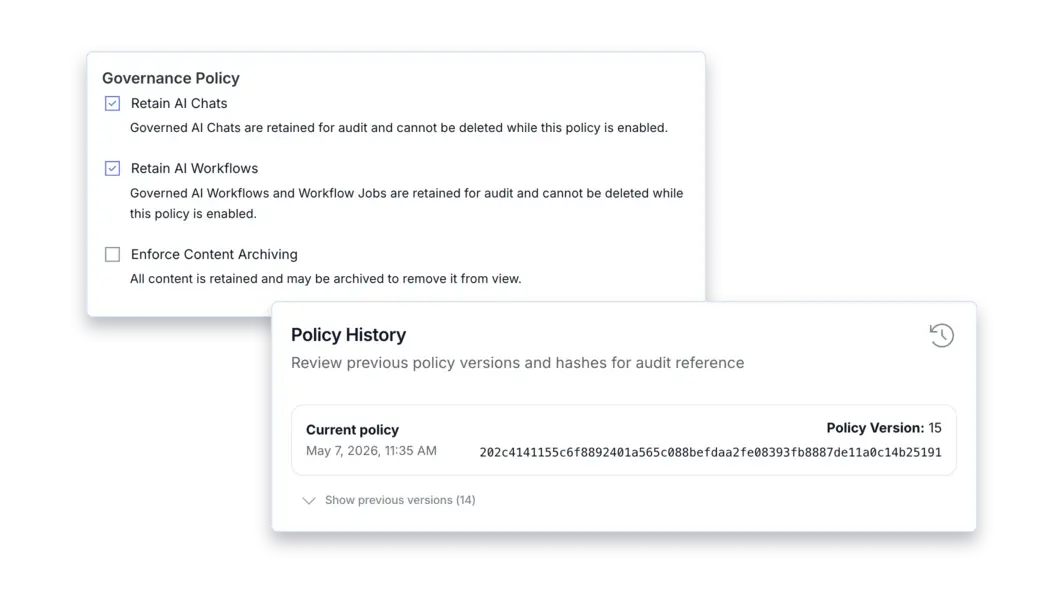
Organization policy
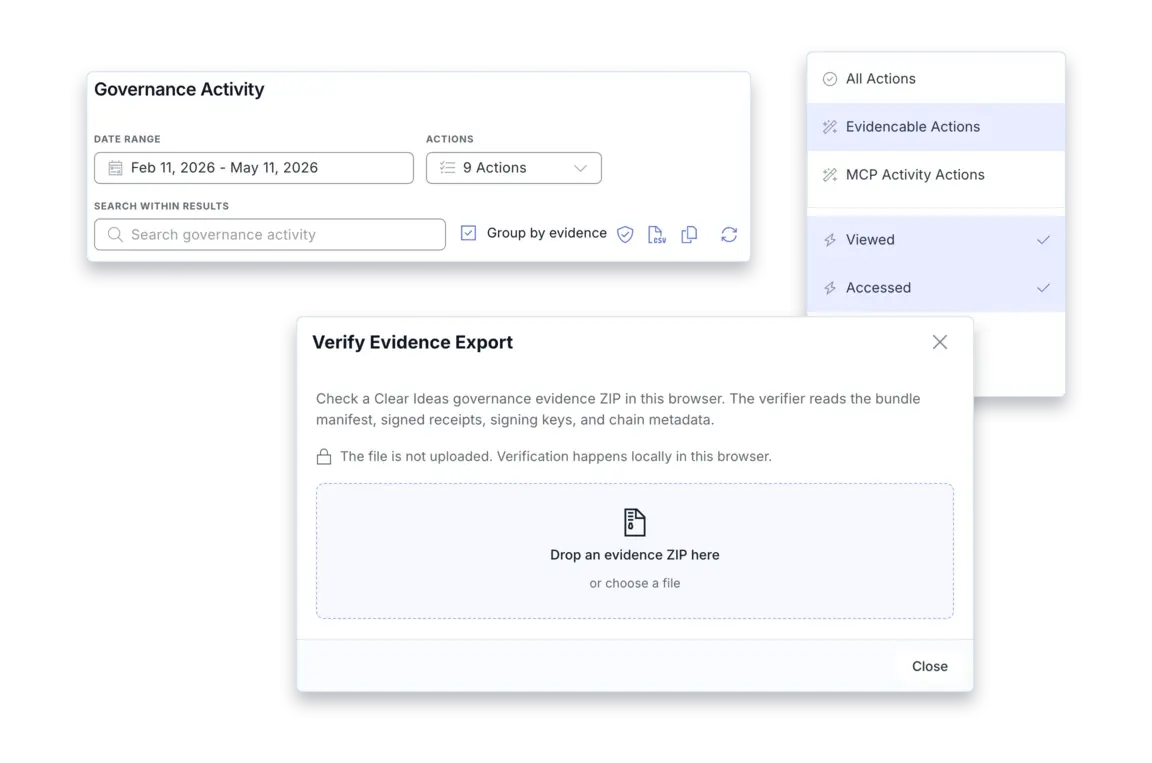
Governance activity and evidence
Governed run evidence
Step outputs, benchmark checks, sources, tool calls, token usage, run events, and evidence export stay attached to the agent run.
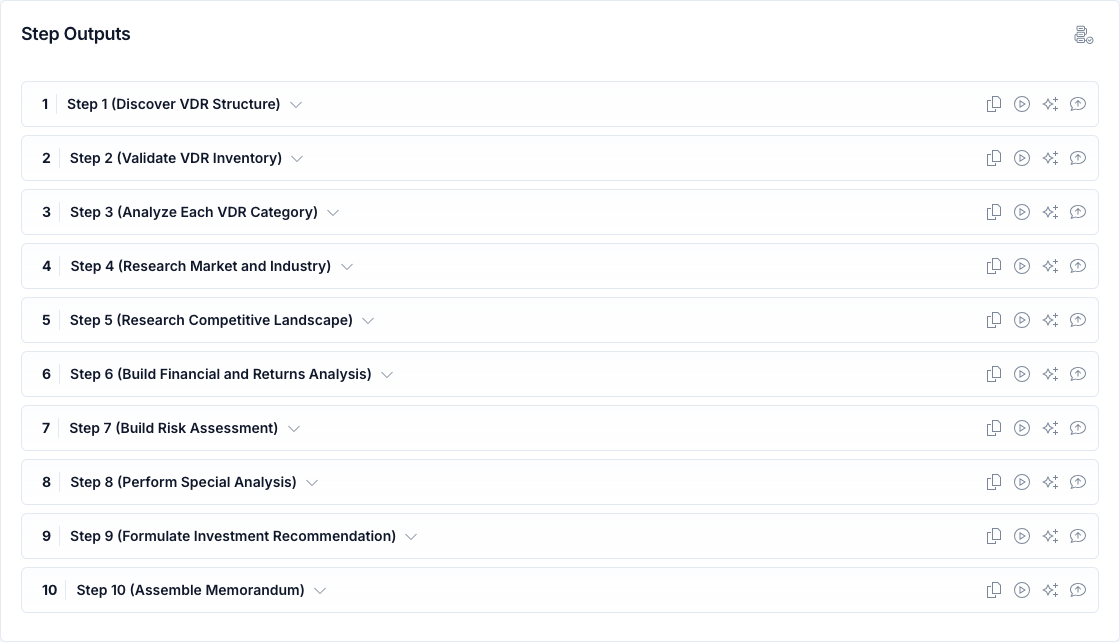

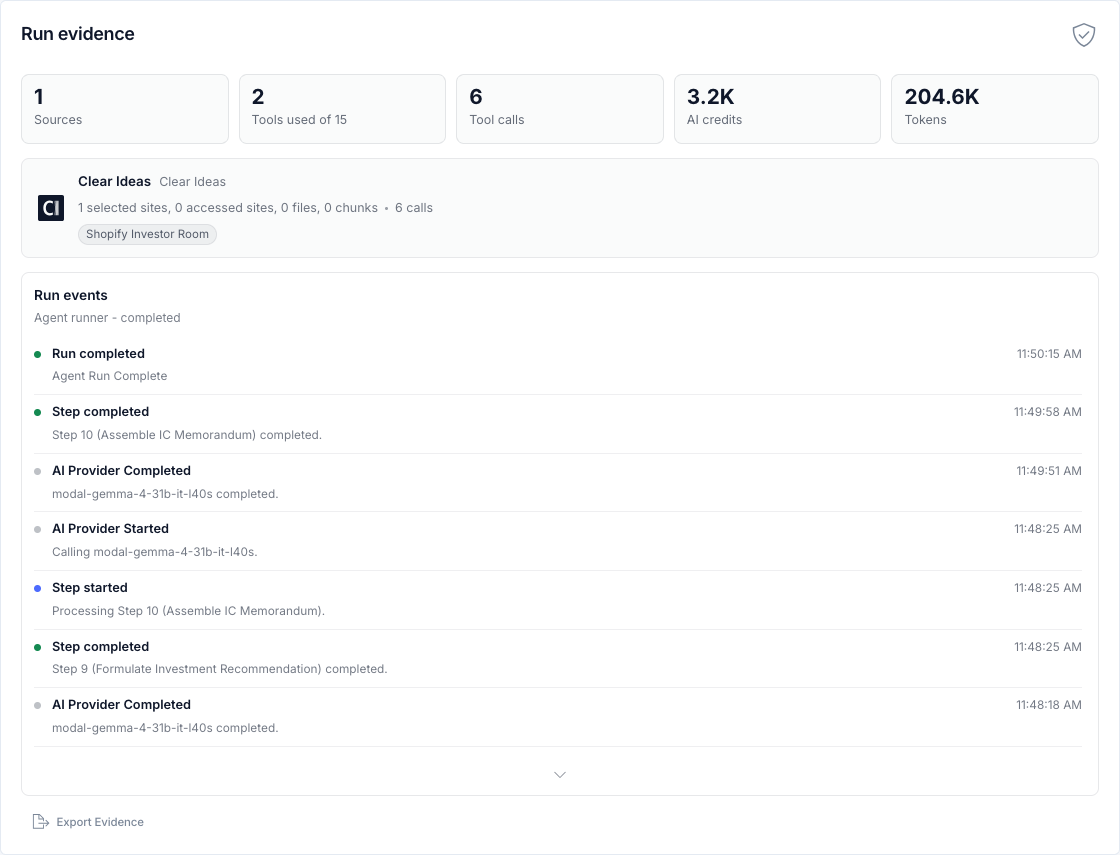
For sensitive business work, a useful AI response is only the start. Teams also need to control what the agent can access, which tools it can use, what it produces, when a human should review the output, and whether the run can be reconstructed later.
That is where Clear Ideas is different. Agents run against governed Sites and approved connections, with scoped tools, review gates, generated work products, and evidence tied to the run.
The result is practical automation with records your team can review.
Each agent run receives a scoped run contract from Clear Ideas. That contract defines the steps, variables, model configuration, approved Site context, available tools, connector access, continuation state, and where results should be saved.
Agent runs report structured events and results back to Clear Ideas. Clear Ideas remains the system of record for permissions, governed storage, generated files, review state, related runs, and evidence.
This gives teams the flexibility of agent automation without turning sensitive work into an unmanaged prompt session.
Clear Ideas Agents are grounded in Sites: the governed workspaces where approved files, users, permissions, and evidence already live. A run can be scoped to specific Sites and variables, and step-level source policies can define which connections or Site content are available.
That keeps sensitive work focused on the approved context for the specific engagement or process, instead of spreading access across unapproved document stores.
Agents can connect to Clear Ideas Sites and approved MCP sources. Connections support read or write modes, tool allowlists, aliases, required status, instructions, evidence settings, and authentication through supported flows such as OAuth or tokens.
This gives teams a practical way to let agents use approved connections alongside Site content without turning external tool access into an unmanaged risk.
Agent runs do not receive broad web access by default. Outbound access follows the run contract: approved model endpoints, Clear Ideas services, enabled web tools, and configured connector destinations.
Paid accounts can also route sensitive agent and chat work through Clear Ideas-managed private AI models when enabled. Private model access keeps the same governed permissions, evidence, and review model while using a small access charge plus token-based AI credit usage instead of per-second billing.
Clear Ideas Agents can run manually or automatically:
Agents can include prompt steps, loop steps, webhook steps, code steps, sub-agent steps, and human-in-the-loop checkpoints. Goal-driven loops can stop when a benchmark, score, or other condition is met, then return either the full iteration history or the final value. Agents can use variable sets, structured outputs, output templates, generated files, images, and final run outputs.
This lets teams reuse a successful process instead of rebuilding the same prompt chain every time the process repeats.
Sensitive work needs quality and review points. Agents can use structured JSON output contracts, validation warnings, benchmark checks, source policies, required variables, and human approval steps.
That lets teams design processes where an agent can generate a result, verify that it follows expected structure or standards, and pause for human review when the risk level calls for it.
Teams can also design agents that respond to benchmark outcomes as part of the workflow itself. For example, an agent can route low-scoring results to a human review step, branch to a follow-up analysis step, or record the benchmark outcome for later improvement.
Every important agent run should leave a useful record. Clear Ideas supports run traces, run events, source usage, tool calls, token and credit usage, generated files, final outputs, and evidence export.
Reviewers can inspect what ran, what it accessed, what tools were used, what it produced, and what happened during execution.
Clear Ideas supports the authoring, automation, review, and evidence features teams need to use agents for sensitive recurring work.
A governed agent runs with defined access, approved Sites, controlled source connections, configured tools, review checkpoints, and evidence. The goal is to make recurring AI work useful without making sensitive content or external tools available by default.
Yes. Agents can use approved Clear Ideas and MCP source connections. Teams can configure tool allowlists, read/write modes, aliases, instructions, evidence settings, and authentication controls so each connection is intentional.
No. Agent runs are configured with approved Sites, tools, model endpoints, connectors, and optional web access. Outbound access follows the run contract and connector settings, so external access is deliberate rather than assumed.
Yes. Agent runs can produce spreadsheets, documents, presentations, images, structured JSON, intermediate outputs, and final responses. Generated files remain tied to the run record so reviewers can see where a deliverable came from.
Clear Ideas gives reviewers access to run traces, runner events, source usage, tool calls, token and credit usage, outputs, generated files, run records, and evidence exports. That helps teams check important work before it is reused, shared, or filed.